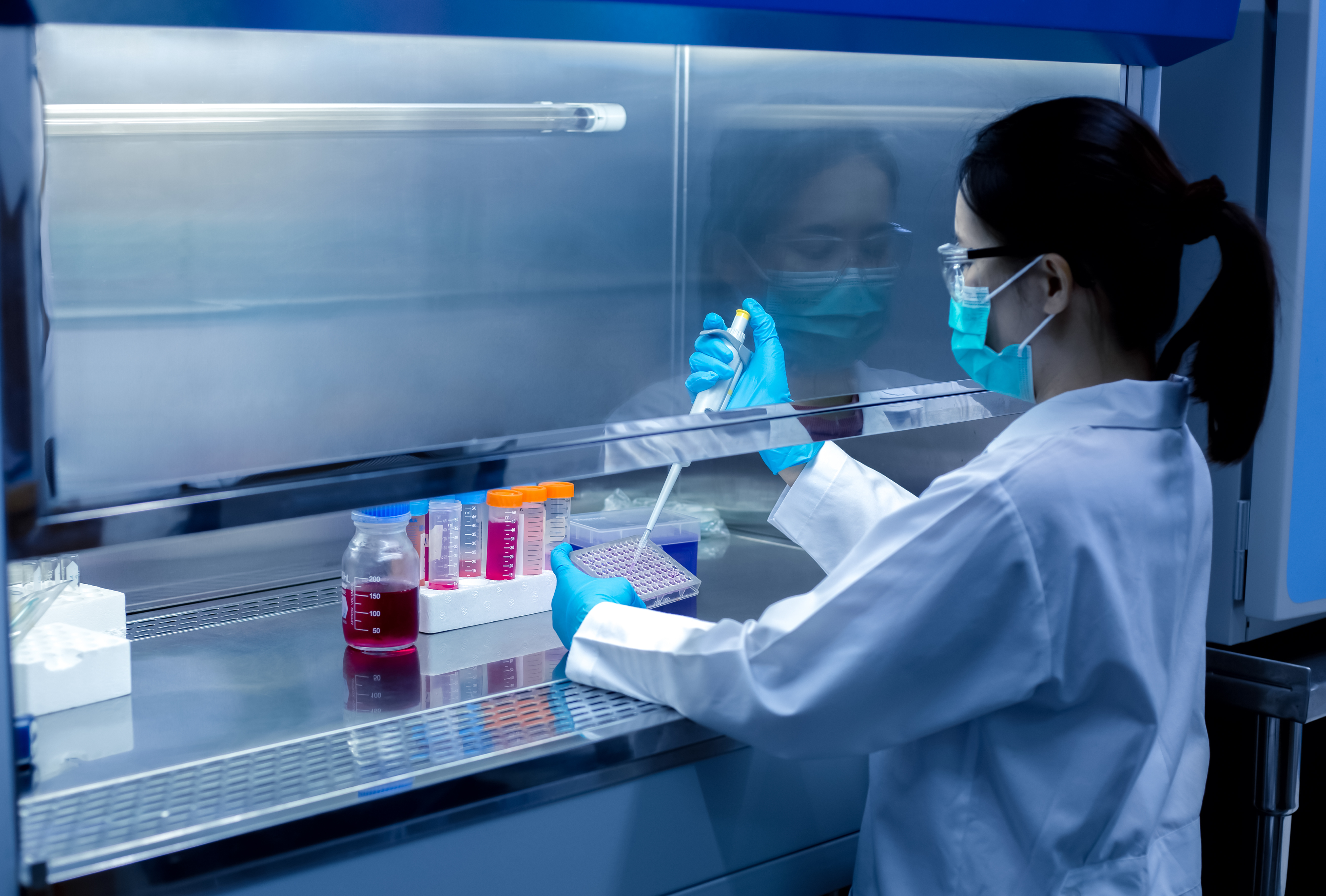
Europe’s biotech sector is entering a new phase. In 2026, the companies standing out are not simply raising capital or building promising platforms. They are delivering clinical data, launching medicines, scaling manufacturing and proving that European innovation can compete globally. From Novo Nordisk and BioNTech to argenx, Immatics and Abivax, we look at ten companies shaping what comes next for European biotech.
Insights
Top 10 European Biotech Companies Driving Innovation in 2026
European biotech is entering its most important period since the pandemic. After several years dominated by funding rounds and scientific promise, 2026 is becoming the year in which platforms either prove themselves in the clinic or lose investor confidence.
UK biotech venture capital reached £2.05 billion in Q2 2026, bringing the H1 2026 total to £2.6 billion, already above every full-year total recorded between 2022 and 2025, according to the BioIndustry Association. The capital is returning. What the sector is now testing is whether the science can keep pace with the ambition.
The correction that followed the 2020 to 2022 peak, including falling valuations, reduced headcount and programme reprioritisations, is giving way to something more durable: companies that raised money to prove something are now proving it, or not. Platform promises are no longer enough. Investors are concentrating capital into companies with convincing clinical progress and clear development plans.
That shift changes the companies worth watching. These ten were selected based on verified data from company filings, clinical trial registries, EMA and FDA sources, and specialist industry publications including Fierce Biotech, Endpoints and European Biotechnology Magazine. They were not chosen to represent a market capitalisation ranking. Each earns inclusion because it explains something specific about where European biotech is heading.
What Qualifies as a European Biotech Company in 2026?
For this article, a European biotech is a company headquartered in Europe whose primary commercial activity is the discovery, development or manufacture of biological medicines or enabling technologies for that process. Large integrated pharmaceutical companies such as Roche and Novartis are not included. They appear in our companion article on the world's top pharmaceutical companies, and their inclusion here would dilute the distinctions that make this list useful.
Lonza is included as a deliberate exception. It is a contract development and manufacturing organisation rather than a drug developer. It earns its place because no discussion of Europe's biotech ecosystem is complete without the company responsible for manufacturing so much of its innovation.
The companies in this article were assessed against the following criteria:
- e quality in 2025 and 2026
- Commercial execution and launch momentum
- Platform differentiation and technology uniqueness
- Manufacturing importance to the wider ecosystem
- Strategic significance within European biotech
This is not a market capitalisation ranking. Every company earns inclusion because it explains something specific about where European biotech is heading.
The Ten Companies at a Glance
The companies below are not ranked by revenue or market capitalisation. Instead, each represents a different force shaping the future of European biotechnology.
| Company | Country | Revenue (FY2025) | Basis | Employees | Core technology |
| Novo Nordisk | Denmark | DKK 309.0 billion (~$43B) | Net sales | ~69,500 | GLP-1 and metabolic medicine |
| argenx | Belgium/NL | $4.2 billion | Global product net sales | ~1,900 | FcRn antibodies |
| Genmab | Denmark | $3,720 million | Revenue (royalties + product sales) | ~3,100 | Antibody engineering |
| BioNTech | Germany | €2.87 billion | IFRS revenues | ~7,800 | mRNA therapeutics |
| UCB | Belgium | €7.74 billion | Revenue | ~10,100 | Neurology and immunology |
| Lonza | Switzerland | CHF 6.5 billion | Net sales | ~20,000 | CDMO manufacturing |
| Evotec | Germany | €788.4 million | Group revenues | ~4,600 | AI-enabled discovery |
| Zealand Pharma | Denmark | DKK 9,215 million (~$1.3B) | Revenue (incl. Roche petrelintide upfront) | ~400 | Peptide therapeutics |
| Immatics | Germany | $56.8 million | Collaboration revenue | ~400 | TCR cell therapies |
| Abivax | France | Pre-commercial | Cash position: €530M (Dec 2025) | ~80 | microRNA immunology |
Revenue figures use the latest publicly disclosed company reported data. For clinical stage companies, revenue may reflect collaboration, milestone or licensing income rather than recurring product sales. Employee counts are approximate as of the most recent disclosure. Sources: Novo Nordisk Q4 2025, argenx FY2025, Genmab 2025 Annual Report, BioNTech FY2025, UCB FY2025, Lonza Annual Report 2025, Evotec FY2025, Zealand Pharma FY2025, Immatics FY2025, Abivax FY2025.
1. Novo Nordisk (Denmark)
Novo Nordisk is the most commercially significant biotech company in Europe and one of the most valuable companies in the world. Its GLP-1 franchise has redefined how the industry thinks about metabolic disease, and its pipeline in 2026 shows a company determined to extend that platform well beyond its origins.
Focus: Cardiometabolic medicines anchored by the world's leading GLP-1 franchise.
2026 development: Wegovy HD (7.2 mg injectable semaglutide), approved by the FDA in March 2026 and launched on 7 April, delivered 20.7% mean weight loss in the STEP UP trial. CagriSema, combining semaglutide with the amylin analogue cagrilintide and achieving 22.7% mean weight loss in REDEFINE-1, is under FDA review with a decision expected in Q4 2026. Zenagamtide, a unimolecular GLP-1 and amylin receptor agonist, has entered Phase 3 (AMAZE programme). The company also reported positive data from the HIBISCUS Phase 3 trial of etavopivat in sickle cell disease, announced in April 2026 and subsequently presented at EHA 2026, signalling that its ambitions extend into rare disease.
What Novo Nordisk tells us about European biotech: A single platform, executed with sufficient depth and manufacturing commitment, can redefine a therapeutic category. The more important lesson for the broader sector is how Novo Nordisk has used the commercial success of semaglutide to fund the next generation of mechanisms, demonstrating that the returns from one breakthrough can compound into an entirely new wave of innovation.
Source: Novo Nordisk Q1 2026 results, ADA 2026 press release, HIBISCUS press release April 2026 available here.
2. argenx (Belgium/Netherlands)
argenx earns its place as Europe's defining autoimmune biotech. In less than a decade it moved from a research organisation to a commercial company with a blockbuster product and a growing platform of FcRn-targeting candidates. It is the clearest example of a European biotech building a therapeutic category from first principles.
Focus: FcRn antibody platform targeting severe autoimmune diseases.
2026 development: argenx reported full-year 2025 preliminary results in January 2026, confirming the continued expansion of Vyvgart (efgartigimod) across multiple autoimmune indications. The company is advancing ARGX-213, a next-generation FcRn antibody that is Phase 3-ready, alongside ARGX-124, an additional FcRn pipeline candidate currently in Phase 1. The ADAPT-Forward study, the first in a series of trials exploring efgartigimod-anchored combination approaches, is now underway. Its multi-year cost-sharing antibody alliance with Genmab, announced in April 2023, opens each company's technology suite to the other, reflecting a level of platform confidence that only the most credible European biotechs can sustain.
What argenx tells us about European biotech: The FcRn mechanism has proved that a European biotech can identify and own an entirely new mode of action, build it into a commercial franchise, and generate the platform depth to sustain multiple follow-on programmes independently. It is also evidence that Belgium and the Netherlands together produce a distinctive kind of immunology company, one that is shaping global standard of care rather than following it.
Source: argenx January 2026 preliminary results and 2026 strategic priorities, Q1 2026 results available here.
3. Genmab (Denmark)
Genmab is the architect of much of what modern antibody medicine looks like. Multiple approved medicines, a proprietary bispecific antibody platform used by global partners, and a wholly owned clinical pipeline position it as the most influential antibody engineering company in Europe.
Focus: Antibody engineering platform powering internal programmes and global partnerships simultaneously.
2026 development: Genmab's proprietary pipeline at the start of 2026 included eight antibody products in active clinical development, including Tivdak (co-developed with Pfizer) in cervical cancer and EPKINLY/TEPKINLY (co-developed with AbbVie) in B-cell lymphoma. Like argenx, Genmab has moved beyond developing a single product into becoming a platform that others licence to build their own pipelines, a model that generates milestone and royalty income while the company advances its own late-stage candidates. Its 2025 full-year results confirmed this dual strategy is producing durable commercial returns.
What Genmab tells us about European biotech: Antibody engineering, when pursued to genuine platform depth, does not have to depend on a single product or a single partner. Genmab's model, proprietary technology licensing alongside internal pipeline development, may be the most resilient business structure available to a European biotech of its size. It has taken more than two decades to build and is not easily replicated.
Source: Genmab 2025 Annual Report, Q1 2026 SEC 6 K filings available here.
4. BioNTech (Germany)
BioNTech is included because the most consequential question in European biotech in 2026 is whether mRNA can become a cancer treatment platform. Having validated the technology at global scale through its COVID-19 vaccine, the company is now running the most ambitious mRNA oncology programme anywhere in the world.
Focus: mRNA therapeutics, pivoting from pandemic vaccines to personalised and tumour-associated antigen cancer vaccines.
2026 development: Autogene cevumeran, BioNTech's personalised neoantigen mRNA vaccine, is being evaluated in a randomised Phase 2 trial in pancreatic ductal adenocarcinoma in collaboration with Genentech. BNT116, its off-the-shelf mRNA vaccine targeting shared lung cancer antigens, showed antitumour activity and immune responses in heavily pre-treated advanced NSCLC patients. BNT324/DB-1311, an antibody-drug conjugate targeting B7H3 in solid tumours, entered a global pivotal Phase 3 trial in May 2026 with Duality Biologics. The company maintains 16 clinical oncology programmes, spanning more than 25 Phase 2 and Phase 3 trials across mRNA vaccines, cell therapies and antibody-drug conjugates.
What BioNTech tells us about European biotech: mRNA has proved itself as a vaccine platform. Whether it becomes a cancer treatment platform is the open question BioNTech's clinical programme is designed to answer. The readouts expected through 2026 and 2027 will either establish mRNA oncology as the next chapter of biological medicine or require another significant pivot, and that outcome will shape how Europe thinks about RNA therapeutics for a decade.
Source: BioNTech 20 F 2025, pipeline page, ASCO 2026 press release available here.
5. UCB (Belgium)
UCB earns its place through commercial execution that most clinical-stage biotechs aspire to but few achieve. Operating across neurology and immunology with a portfolio that has expanded consistently over several years, UCB raised its full-year 2026 guidance in July 2026, a signal of momentum that the noisier parts of biotech rarely deliver.
Focus: Neurology and immunology, with a growing commercial portfolio across both functions.
2026 development: Bimekizumab (Bimzelx), its IL-17A and IL-17F inhibitor, continues to build commercial momentum across psoriasis, psoriatic arthritis and ankylosing spondylitis. Rozanolixizumab (Rystiggo), its FcRn antibody for generalised myasthenia gravis, adds immunology depth to what was once primarily an epilepsy and Parkinson's portfolio, operating in the same mechanism space as argenx's efgartigimod and underscoring how much the FcRn mechanism has reshaped European immunology. Raised 2026 guidance confirmed in July 2026 reflects consistent execution across both franchises.
What UCB tells us about European biotech: Sustained commercial execution across multiple therapeutic cycles is itself a competitive advantage. In a sector that prizes breakthrough moments, UCB demonstrates the value of building carefully, holding programme quality through development and delivering on the commercial promises made at launch, year after year, without the volatility that characterises much of the biotech conversation.
Source: UCB 2026 guidance update, The Pharmaletter July 2026 available here.
6. Lonza (Switzerland)
Lonza is not a drug developer. It is the manufacturing infrastructure on which European biotech depends. No discussion of the European biotechnology sector is complete without the company that produces, at commercial scale, a significant proportion of what the biologics pipeline delivers to patients. Its inclusion here is deliberate and necessary.
Focus: Contract development and manufacturing across biologics, specialised modalities and advanced therapies.
2026 development: Lonza reported CHF 6.5 billion in full-year 2025 sales and guided for 11 to 12% CER sales growth in 2026. Its H1 2026 results confirmed strong performance across all business platforms, with group sales of CHF 3.4 billion and +16.0% CER growth. The agreement to divest its Capsules and Health Ingredients business, signed in March 2026, sharpens its focus on biologics, antibody-drug conjugates and cell and gene therapies. In July 2026, Lonza expanded a strategic biologics manufacturing collaboration with a leading US biopharmaceutical company, adding two commercial programmes with an option for two more.
What Lonza tells us about European biotech: Every clinical-stage biotech in this list that reaches commercial scale will face a manufacturing decision. Lonza's sustained double-digit growth at the group level is a direct measure of how healthy the pipeline flowing through it has become. Its performance is not just a business story. It is a proxy for the ambition and execution capacity of European biotech as a whole.
Source: Lonza FY 2025 results, Q1 2026 update, H1 2026 results, July 2026 expansion announcement available here.
7. Evotec (Germany)
Evotec is included as the honest version of the AI drug discovery story. With more than 4,500 employees and a platform integrating artificial intelligence, machine learning and multimodal biological data, it represents Europe's most sustained attempt to embed AI into the core of pharmaceutical R&D, along with the commercial challenges that come with it.
Focus: AI-enabled drug discovery platform with co-development and partnership agreements across pharma and biotech.
2026 development: Evotec's EVOiR&D platform integrates AI with high-throughput biological data generation to accelerate target identification and candidate optimisation. The company operates co-development agreements with large pharma and biotech, sharing both R&D costs and commercial upside. Following guidance updates and leadership changes in 2023 and 2024, including the departure of CEO Werner Lanthaler, the period from 2025 into 2026 has focused on execution quality over partnership volume, a reset that prioritises delivering on existing commitments before expanding into new ones.
What Evotec tells us about European biotech: AI drug discovery is neither hype nor a solved problem. Evotec demonstrates that the technology has genuine value: the biology is tractable, the data integration is powerful, and the platform has produced programmes advancing through clinical development. The unresolved challenge is converting platform capability into sustainable commercial returns at scale, and Evotec's evolution is the most transparent example of that challenge playing out in real time across European biotech.
Source: Evotec corporate materials, H1 2026 report, investor communications available here.
8. Zealand Pharma (Denmark)
Zealand Pharma earns its place by demonstrating that Denmark's peptide expertise extends well beyond Novo Nordisk. With a GLP-1 and glucagon dual agonist in Phase 3 and a short bowel syndrome programme under FDA review following a complete response letter in late 2024, it is building a commercial-stage peptide biotech independent of any anchor company.
Focus: Peptide therapeutics across metabolic disease, gastrointestinal conditions and adjacent areas.
2026 development: Survodutide, a GLP-1 and glucagon dual receptor agonist co-developed with Boehringer Ingelheim, is in Phase 3 across obesity and MASH/NASH, one of the most closely watched programmes in the next-generation cardiometabolic pipeline. Glepaglutide, its GLP-2 analogue for short bowel syndrome, is currently under FDA review after receiving a complete response letter in December 2024. Zealand Pharma is working to address the FDA's request for additional data. Unlike Novo Nordisk's vertically integrated model, Zealand operates as a discovery and development partner, licensing to larger organisations while retaining meaningful economics on its own late-stage assets.
What Zealand Pharma tells us about European biotech: The deepest biotech clusters produce multiple successful companies, not just one. The peptide chemistry capabilities and regulatory understanding built around Denmark's life sciences ecosystem have transferred across organisations, creating an environment where scientific know-how compounds into independent businesses. Zealand is proof that Novo Nordisk's dominance has accelerated, rather than inhibited, the formation of capable peers.
Source: Zealand Pharma corporate materials, Boehringer Ingelheim partnership disclosures, FDA CRL December 2024 available here.
9. Immatics (Germany)
Immatics is the most clinically compelling oncology inclusion in this list. Its TCR-based cell therapies are producing response rates in solid tumours, historically the hardest problem in cancer immunotherapy, that have drawn serious attention from both the clinical and investment communities.
Focus: T-cell receptor (TCR) cell therapies and bispecific candidates targeting solid tumours through precision PRAME targeting.
2026 development: Anzu-cel (IMA203), its PRAME-directed TCR-T therapy, delivered a 67% confirmed objective response rate in 16 patients with metastatic uveal melanoma at the ESMO 2025 Presidential Symposium, a tumour type with historically poor clinical outcomes. A global, randomised Phase 3 trial (SUPRAME) in previously treated advanced melanoma is ongoing, with interim and final analyses expected to be triggered in 2026. Updated Phase 1b data presented at the 2026 ASCO Annual Meeting showed a 56% confirmed ORR in metastatic melanoma at longer follow-up. IMA402 and IMA401, the company's TCR bispecific programmes, achieved clinical proof of concept with deep and durable responses in heavily pre-treated patients across multiple solid tumour types.
What Immatics tells us about European biotech: Solid tumour immunotherapy is producing genuine clinical signals from a European company working from first principles. If the SUPRAME Phase 3 data holds, Immatics will have done something that eluded most of oncology for a decade: delivered a cell therapy that works in solid tumours at randomised controlled trial scale. It is the most significant clinical test of European biotech ambition currently underway.
Source: Immatics Q3 2025 financial results, ESMO 2025 presentations, Q1 2026 results, 2026 ASCO presentation available here.
10. Abivax (France)
Abivax earns its place on the strength of clinical data delivered under difficult conditions. Its Phase 3 ABTECT programme in ulcerative colitis, a large Phase 3 programme with 1,275 patients enrolled across over 600 sites in 36 countries, produced positive results at both induction and 44-week maintenance, making Abivax the most significant French biotech clinical story of 2026.
Focus: Oral anti-inflammatory therapeutics targeting the microRNA-124 pathway in chronic inflammatory diseases.
2026 development: Abivax announced positive top-line results from both ABTECT-1 and ABTECT-2, its Phase 3 induction trials, in July 2025. On June 1, 2026, the Phase 3 ABTECT maintenance trial met its primary endpoint of clinical remission at week 44 at both the 25 mg and 50 mg doses of obefazimod, along with all key secondary endpoints. The ABTECT programme randomised 1,275 patients across over 600 sites in 36 countries. The maintenance trial (Study 107) enrolled 580 participants. On June 29, 2026, the supplemental Part 2 maintenance programme also produced positive results. A New Drug Application to the FDA is planned for late Q4 2026, with a Phase 2b trial in Crohn's disease (ENHANCE-CD) enrolling in parallel.
What Abivax tells us about European biotech: A genuinely first-in-class mechanism, obefazimod works through microRNA-124 modulation, a pathway not targeted by any approved medicine, can reach Phase 3 approval from a French biotech navigating serious cash constraints, multiple fundraises and a decade of clinical development. Abivax's story is the most instructive in this list about what independent European biotech actually requires: not a quick route to acquisition, but the resolve to build clinical proof through circumstances that would have ended most programmes.
Source: Abivax IR press releases July 2025, June 1 and June 29, 2026; ABTECT investor presentation; pipeline page available here.
What Does European Biotech Growth Mean for Specialist Talent?
The ten companies in this article are generating demand for a specific kind of professional that the European market has not yet learned to produce in sufficient numbers.
Cell therapy manufacturing, as Immatics's SUPRAME programme approaches commercial-scale readiness, requires a combination of GMP expertise and TCR-T manufacturing knowledge that barely existed as a defined skill set five years ago. AI-enabled drug discovery programmes like Evotec's EVOiR&D need data scientists who understand the regulatory and biological constraints that make pharmaceutical AI different from general machine learning. Regulatory affairs professionals who can engage with both EMA's evolving AI frameworks and the FDA's 2026 drug development guidance are among the most competed-for profiles across the Netherlands, Germany, Switzerland and Belgium right now.
The common thread across these ten companies is that success is becoming less dependent on discovering a molecule and more dependent on building the multidisciplinary teams capable of translating that science into approved medicines. Biology, manufacturing, regulation, data science and commercial execution are increasingly inseparable, and the organisations that treat talent strategy with the same rigour they apply to pipeline strategy are the ones reaching patients on schedule.
Whether you are scaling an antibody platform, expanding manufacturing capacity or building an AI-enabled discovery team, the talent challenges behind these companies are becoming increasingly specialised. Panda International supports life sciences organisations across Europe's leading biotech hubs with specialist recruitment in these disciplines.