Roche and Novartis headquarters within walking distance of each other. A dense ecosystem of pharma, biotech, medtech, and service providers. Salaries that are among the strongest in Europe. Basel is one of Europe's most attractive and competitive life-sciences destinations. This guide covers what you actually need to know before making the move.
Insights
Is Basel the Best City in Europe for Life Sciences Careers?

For many life sciences professionals, Basel is the obvious answer to where in Europe to build a career. The concentration of global employers, the seniority of the roles on offer, and the salary premium over other European markets are real. So is the entry bar, the cost of living, and the complexity of making the move work in practice.
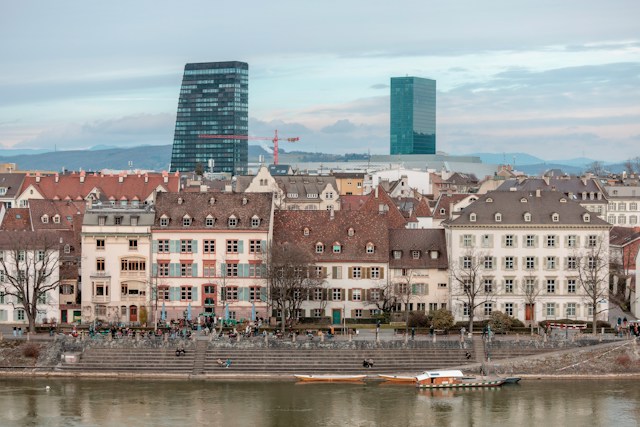
Basel occupies a small corner of northwestern Switzerland, bordered by Germany to the north and France to the west. It is home to two of the world's largest pharmaceutical companies: Roche and Novartis, whose global headquarters sit within walking distance of each other along the Rhine. Few European cities match this concentration of global life-sciences decision-making.
Basel is part of a wider economic region that includes Basel-Stadt, Basel-Landschaft, and Jura. According to Basel Area Business & Innovation, the region is home to more than 800 life-sciences companies, over 1,000 research groups, and more than 33,000 highly qualified life-sciences professionals. For life-sciences professionals considering a move, Basel represents both a strong opportunity and a demanding entry bar.
Why is Basel in a category of its own for European life sciences?
Roche's Basel/Kaiseraugst operations employed around 12,400 full-time employees in 2025, according to the company's own Switzerland publication. Roche describes Basel as its global headquarters and as the worldwide largest site for pharmaceutical research. The company is also investing around CHF 500 million in a new research and development building in Basel, designed for up to 450 researchers and scheduled for completion in 2029.
Novartis is the other major anchor. Its Basel campus is a centre for research, development, and corporate operations, sitting alongside Roche's headquarters in the city. Together, the two companies anchor a labour market that also includes CDMOs, biotechs, medtech companies, service providers, and clinical research organisations.
The concentration matters beyond headcount. The decisions made in Basel, on pipeline prioritisation, therapeutic strategy, and which technologies receive investment, have an outsized influence on the broader industry. Senior R&D leaders, translational scientists, regulatory affairs leaders, and commercial strategy professionals with international track records are present in Basel at a density few European locations can match.
That density creates a labour market with distinctive properties. Mid-level professionals compete against a highly qualified international pool. Senior profiles are often hired on global mandates, with expectations to match.
Basel also functions as one labour market with the German and French border regions. Many professionals live in Germany or France and commute into Switzerland daily. Roche says around a third of its Basel/Kaiseraugst employees commute from across the border. This cross-border dynamic expands the candidate pool for employers and gives professionals the option of living outside Switzerland while working within it, a material cost-of-living consideration worth understanding before you start your search.
What do life sciences roles pay in Basel?
Basel sits at or near the top of European life-sciences compensation, reflecting the seniority of many roles on offer and the concentration of global pharmaceutical employers in the region.
The most reliable starting point is official Swiss wage data. In 2024, Switzerland's gross median monthly salary for a full-time position was CHF 7,024. In Northwest Switzerland, the region that includes Basel, the median was CHF 7,156 per month.
The pharmaceutical sector sits materially above those broader benchmarks. The Federal Statistical Office reported a 2024 gross median monthly salary of CHF 10,159 for the pharmaceutical industry, compared with CHF 9,139 in research and development. These are sector-wide figures rather than Basel-specific or company-specific salary bands, but they give a credible indication of the premium attached to pharmaceutical and R&D work in Switzerland.
Salaries in Switzerland are commonly quoted as annual gross figures over 13 months. The 13th-month payment is a standard feature of many Swiss employment contracts, not an exceptional bonus. Actual compensation varies by seniority, function, employer, individual performance, bonus, equity, and whether a role is permanent or interim.
For candidates comparing offers, it is worth distinguishing between base salary, variable compensation (annual bonus, long-term incentives, and equity where applicable), total compensation, and net income after tax and social-security contributions.
Publicly available salary aggregators can provide a useful sense of the market, but should not be treated as definitive employer pay scales. For a move to Basel, the most reliable approach is to benchmark a specific offer against recent offers for comparable functions, seniority levels, and employer types.
Which companies are hiring in Basel?
Roche and Novartis are the anchors, but the ecosystem around them is substantial.
Basel Area Business & Innovation identifies the region as home to more than 800 life-sciences companies, including Roche, Novartis, Bayer, BeOne Medicines, Moderna, Lonza, and Bachem. The organisation also reports that 27 of the 38 companies it supported to establish operations in the Basel Area in 2025 were life-sciences companies.
Roche is a major employer across pharmaceutical research, development, diagnostics, manufacturing, and commercial functions, with around 12,400 full-time employees at its Basel/Kaiseraugst site in 2025. Novartis employs a large workforce across research, development, and corporate functions in Basel. Lonza is a leading global CDMO with operations in the wider Basel region. Straumann Group operates globally from Basel in dental implants and oral health.
Beyond these anchors, Basel hosts an active smaller biotech ecosystem, CROs serving the large pharma companies, and a growing number of digital-health and clinical-technology organisations drawn to proximity with the industry's decision-makers. Basel Area Business & Innovation describes the region as representing the entire life-sciences value chain.
For senior or specialised roles, it is common for shortlists to include candidates from across Europe and beyond. Candidates with strong domain expertise, international experience, and in-demand technical or regulatory skills are generally better positioned.
What is the visa and work permit context for international candidates?
Switzerland is not an EU member state, and its work permit system operates separately from EU free movement. The practical implications depend on where you are coming from.
EU and EFTA nationals benefit from the Agreement on the Free Movement of Persons between Switzerland and the EU. In practice, an EU or EFTA national with a valid employment contract registers with the commune where they will live and applies for a residence permit through the relevant cantonal authority.
Non-EU/EFTA nationals face a more selective process. Switzerland's federal government sets annual quotas for residence permits available to third-country nationals. A job offer alone is not sufficient: employers must respect the principle that Swiss and EU/EFTA workers have precedence, and show that no suitable candidate from those labour markets is available. Non-EU/EFTA nationals must also generally be highly qualified: managers, specialists, or other skilled professionals.
For highly specialised scientific, technical, and leadership profiles, employer sponsorship is common, but the process remains selective and timeline-dependent. Candidates and employers should plan for a longer lead time than for EU/EFTA nationals.
German is the primary language of Basel and the surrounding canton. English is the working language for many scientific, technical, and corporate roles at international employers, but German becomes important for Swiss market-facing commercial roles, local regulatory work, and roles involving Swiss sites or authorities. It also makes daily life substantially easier.
Basel's cross-border labour market is worth understanding for candidates who want to work in the city but prefer to base themselves in Germany or France. Living in Lörrach or Freiburg while working in Basel is common. Roche says around a third of its Basel/Kaiseraugst employees commute from across the border. Housing costs in the German border region can be materially lower than in Basel itself, though the net financial outcome depends on the applicable cross-border tax and social-security arrangements. Professional advice is important before committing to a cross-border setup.
What is the honest cost-of-living picture in Basel?
Basel is an expensive city. It is not generally regarded as the most expensive in Switzerland, but it sits above most European cities, and the purchasing-power calculation requires careful handling.
Housing is the dominant cost. Rental prices vary substantially by neighbourhood, building condition, apartment size, and what is included. Candidates should budget for both rent and Nebenkosten, the additional charges covering heating, hot water, building maintenance, and other building-related costs.
Monthly living expenses beyond rent are substantial but broadly predictable. A realistic budget depends heavily on household composition, commute, insurance, diet, and lifestyle. For a single professional, groceries, transport, health insurance, telecommunications, and discretionary spending add materially to the monthly total.
Public transport in Basel and the surrounding region is extensive. A monthly pass provides practical coverage across the city and neighbouring areas, though the right ticket depends on where you live and how often you travel.
Swiss income taxes are generally low by European standards, but net income depends on more than the headline rate. Canton and commune of residence, marital status, children, church affiliation, insurance, pension contributions, and individual deductions all affect the outcome. Gross salary does not translate directly into a predictable net figure without modelling your personal circumstances.
The cross-border living option changes the financial calculation. A professional living in Germany or France while working in Basel may achieve a materially better housing-cost position. The net financial outcome is not automatic, though. Cross-border tax and social-security arrangements can be complex. Professional advice is important before committing to a cross-border arrangement.
Frequently asked questions
Is English sufficient to work in Basel, or is German essential?
For many scientific, technical, and corporate roles at international employers, English is the working language and sufficient to perform the job. German becomes important for Swiss market-facing commercial roles, local regulatory work, and anything involving Swiss sites or authorities. It also makes daily life substantially easier.
How competitive is the market for mid-level roles at major Basel employers?
Highly competitive. Basel's major employers attract applications from across Europe and beyond. Mid-level roles at specialist and manager level can draw large international shortlists. Candidates who can demonstrate strong domain expertise, international experience, and in-demand skills (computational, regulatory, or clinical) are generally better positioned. German language capability or a track record in Swiss or German-speaking environments can provide an additional advantage.
How long does the work permit process take?
For EU and EFTA nationals, registration is administrative and typically straightforward, though exact timing varies by canton and individual circumstances. For non-EU/EFTA nationals, employer-sponsored permit applications take longer. Employers must meet labour-market precedence and qualification requirements, and both candidate and employer should plan for an extended timeline.
Is it worth considering cross-border living rather than renting in Basel itself?
For some candidates, yes. Housing costs in the German or French border regions can be lower than in Basel, and the commute is often manageable. The net financial outcome depends on individual circumstances, though, and cross-border tax and social-security arrangements can be complex. Professional advice is important before committing.
Panda International recruits QA and QC talent for life-sciences organisations across Switzerland and the Netherlands. If you are exploring a move to Basel or building a quality team there, get in touch.