The numbers attached to GLP-1 drugs have become difficult to contextualise in the normal language of pharmaceutical market growth. Semaglutide alone the active ingredient in Ozempic and Wegovy became the world's best-selling drug in 2023. The global obesity drug market, currently valued at roughly $24 billion, is projected to grow fifteenfold by 2030. Eli Lilly's tirzepatide is scaling at a pace that has forced the company to commit multi-billion-euro investments in manufacturing infrastructure across multiple continents simultaneously.
Insights
The GLP-1 Effect: How the Obesity Drug Boom Is Draining Europe's Peptide Manufacturing Talent Pool
Behind every dose of every GLP-1 drug is a peptide synthesis process. And behind every peptide synthesis process is a set of professionals whose skills are so specialised, so recently in demand at scale, and so concentrated in a handful of geographic clusters that the manufacturing expansion now required to meet GLP-1 demand is running directly into a talent constraint that the industry is only beginning to fully reckon with.
This is not the general GMP talent shortage, which is itself serious. This is a different, narrower, and in some respects more acute problem. The people who can design, operate, validate, and optimise peptide manufacturing processes at commercial scale particularly the solid-phase peptide synthesis reactors, HPAPI containment environments, and purification systems that GLP-1 production requires represent a talent pool that barely existed at its current required scale five years ago. The demand being placed on that pool right now is extraordinary. And it is being placed simultaneously by multiple major employers competing from the same constrained geographic base.
What makes peptide manufacturing talent different
To understand why the GLP-1 hiring crunch is categorically different from the broader GMP talent shortage, it helps to understand what peptide manufacturing actually demands of the people running it.
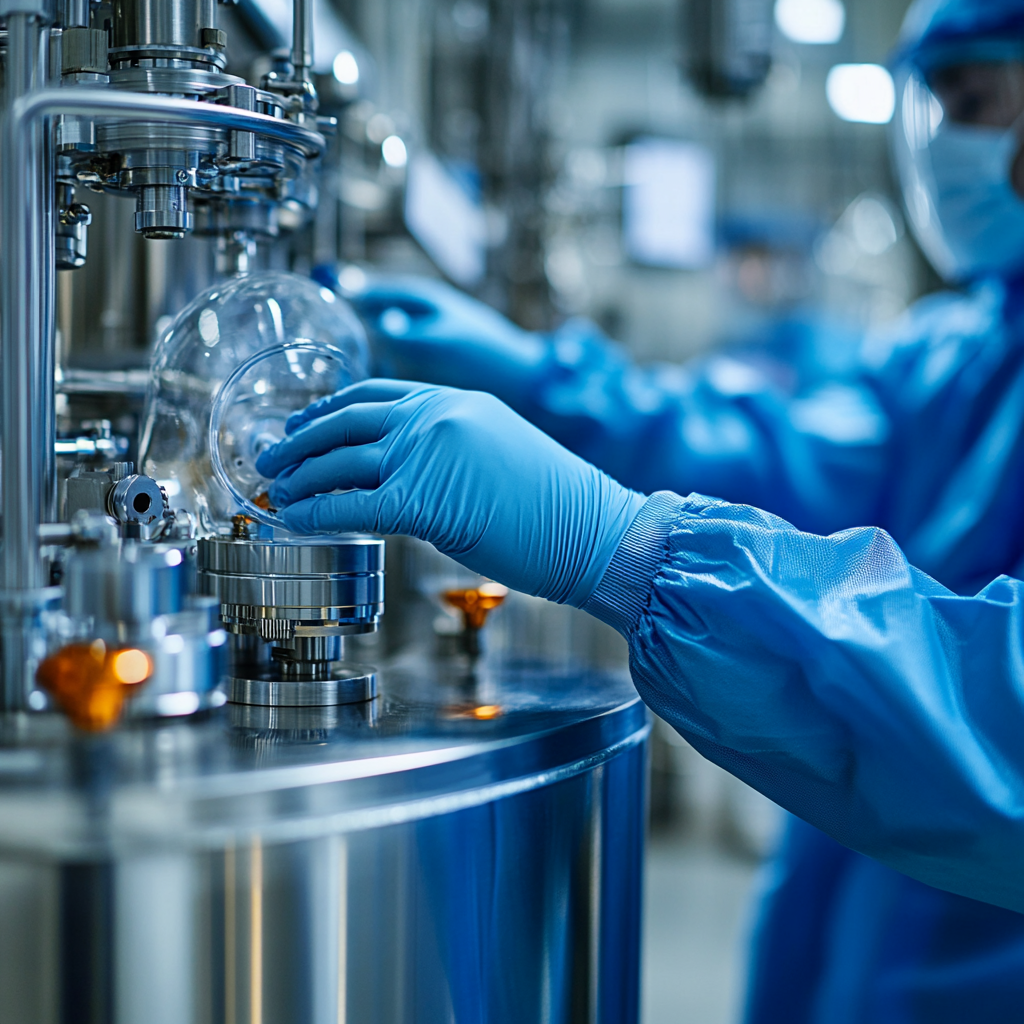
Solid-phase peptide synthesis the dominant production method for GLP-1 drugs is a chemically intensive, equipment-specific process that operates at the boundary of fine chemical manufacturing and pharmaceutical GMP production. The SPPS reactors used in commercial-scale peptide production require operators and engineers who understand resin chemistry, coupling reagent kinetics, cleavage conditions, and the relationship between reactor design and process yield in ways that do not transfer directly from biological manufacturing, small-molecule oral solid dose, or even most injectable API experience.
HPAPI containment adds a further layer of specialisation. GLP-1 drugs are pharmacologically potent at very low doses, which means manufacturing environments require containment engineering and operational protocols calibrated to occupational exposure limits that most GMP professionals have never worked within. The engineers and MSAT specialists who understand how to design, validate, and operate within those containment environments who can troubleshoot a containment breach, manage the change control implications of a containment system modification, or qualify a new isolator technology are not produced by standard pharmaceutical engineering or validation training pathways.
Purification is the third domain where peptide-specific expertise creates a hiring constraint. The HPLC purification systems used in large-scale peptide manufacturing operate at a scale and with a complexity particularly around chiral separation, gradient optimisation, and yield recovery from increasingly large batch volumes that requires specialist process chemistry knowledge not commonly held by general pharmaceutical process engineers.
The combined result is a role profile process engineer or MSAT specialist with genuine peptide synthesis, HPAPI containment, and purification experience at commercial GMP scale that was simply not being produced in significant numbers by the industry five years ago because the demand was not there to create it. The demand is now there, emphatically, and the supply has not caught up.
Bachem, the Basel corridor, and the concentration problem
The geographic concentration of peptide manufacturing expertise in Europe makes the talent constraint sharper still. The Basel Corridor the cluster of pharmaceutical and CDMO manufacturing operations centred on the Swiss Rhine Valley is the most significant concentration of peptide manufacturing capability in Europe. It is also, by some distance, the most active single site of competing demand for peptide manufacturing talent on the continent right now.
Bachem's CHF 1.32 billion expansion at Sisslerfeld represents one of the largest single capital investments in peptide manufacturing infrastructure in European pharmaceutical history. The new facility is designed to serve GLP-1 demand specifically and requires a manufacturing workforce calibrated to the SPPS, HPAPI, and purification requirements described above. The peak hiring window for that expansion runs through 2024 and 2025 which is precisely when the rest of the Basel Corridor's major hiring campaigns are also active.
Lonza's Stein and Visp expansion, with over €500 million committed, draws on the same regional talent pool for MSAT, CQV, and process engineering profiles. Novartis continues ongoing operations and project hiring across the same geography. Combined investment across the Basel Corridor's concurrent major expansions exceeds €1.1 billion. CQV role demand in the region is up approximately 40% year-on-year.
The practical consequence for any organisation hiring peptide manufacturing talent in this corridor is that the competitive environment is not national or international it is hyperlocal. The professionals with the specific peptide synthesis and HPAPI experience that GLP-1 manufacturing requires are, in the majority of cases, already working within a 30-kilometre radius of the sites competing to hire them. A hire made by Bachem is frequently a departure from Lonza. A process engineer recruited by a new market entrant is typically being drawn from an existing employer in the same corridor. Time-to-fill for senior process engineering and MSAT roles in this region has extended well beyond the European average of 78 days precisely because the pool is simultaneously under pressure from multiple directions.
The scale-up problem nobody planned for
There is a broader structural issue sitting beneath the immediate Basel Corridor competition. The GLP-1 manufacturing scale-up that is now underway globally is happening at a speed that no workforce planning cycle anticipated because the commercial success of semaglutide and tirzepatide was not projected at anything approaching its actual scale even three years ago.
Manufacturing planning and workforce development operate on five-to-ten-year horizons. The peptide manufacturing talent pipeline the training programmes, the CDMO apprenticeship pathways, the academic and industry collaborations that produce experienced process chemists with SPPS expertise was not dimensioned for the demand now being placed on it. It was dimensioned for a peptide manufacturing market that was, until very recently, a niche segment of pharmaceutical API production rather than the fastest-growing manufacturing challenge in the global industry.
The result is a gap that cannot be closed quickly through conventional workforce development. You cannot train a process engineer to commercial-scale SPPS competence in twelve months. You cannot build HPAPI containment operational experience without years of supervised manufacturing exposure. The professionals who have that experience are the same population that was operating in specialty peptide manufacturing, oncology HPAPI production, and specialist CDMO environments before GLP-1 changed the demand picture entirely. That population is finite, already employed, and being approached continuously.
For MSAT Leads and Heads of Engineering at peptide CDMOs, this creates a specific strategic challenge. The expansion projects requiring the most urgent talent activation the ones with fixed customer commitments, regulatory timelines, and commercial supply agreements driving their schedules cannot wait for the workforce development pipeline to catch up. The people needed to deliver those projects exist now in the market. The question is whether the engagement strategy being used to reach them is calibrated to the actual competitive environment, or to a market that no longer exists.
What effective hiring looks like in this market
The characteristics of the peptide manufacturing talent market in the GLP-1 era require a different approach from standard pharmaceutical technical operations recruitment in almost every dimension.
The relevant pool is not on job boards. Experienced peptide process engineers and MSAT specialists with commercial-scale GLP-1 manufacturing backgrounds are not actively searching. They are in role, engaged, and receiving unsolicited approaches regularly. Reaching them requires direct engagement through networks built specifically within the peptide and HPAPI manufacturing community not broad-market approaches that reach a fraction of the relevant population and typically produce longer timelines and weaker shortlists.
Modality-specific experience cannot be approximated. An MSAT specialist with biologics experience cannot be assumed to transfer effectively into a peptide process environment without significant adjustment. A process engineer from a small-molecule solid dose background does not carry the resin chemistry or purification optimisation knowledge that GLP-1 manufacturing requires. In a constrained market, the temptation to accept adjacent experience is understandable. In practice, it creates technical risk during the most critical phases of a scale-up campaign.
Contractor engagement is not a second-best option. Many of the most capable professionals in the peptide manufacturing talent pool operate as contractors precisely because the demand for their skills is project-intensive and geographically distributed. Experienced SPPS process specialists and HPAPI-qualified MSAT contractors are often available for engagements that permanent roles cannot accommodate and their immediate availability can be the difference between a scale-up campaign that holds its schedule and one that does not.
The hiring window matters more in this market than in almost any other GMP specialism. In the Basel Corridor specifically, passive talent engagement and early contractor commitments are the primary risk mitigation strategies available to organisations that have not yet activated formal searches. Organisations that have not mapped the regional hiring activity of their competitors before activating their own search are, effectively, entering the market late regardless of how strong their employer proposition is.
The bigger picture
The GLP-1 boom is the most significant driver of pharmaceutical manufacturing investment in Europe right now. Its effects on the talent market for peptide manufacturing professionals are already visible in extended time-to-fill, rising contractor day rates, and the increasing frequency with which organisations in the Basel Corridor find themselves competing for the same three or four candidates for a critical process engineering role.
Those effects will intensify before they ease. The manufacturing capacity being built to serve GLP-1 demand will require ongoing MSAT, process engineering, and validation support for years after initial facility qualification. The workforce planning decisions being made now whether to engage the market early, whether to build contractor relationships in advance of need, whether to treat peptide-specific experience as non-negotiable rather than aspirational will determine which organisations can staff those facilities on schedule and which cannot.
The obesity drug boom is the biggest pharmaceutical story of this decade. The manufacturing talent crunch it is creating in the Basel Corridor and beyond is the operational reality behind that story. The organisations that understand both are the ones best positioned to navigate what comes next.
Panda International supports MSAT, process engineering, and technical operations hiring in peptide manufacturing and specialist GMP environments across Switzerland, the Netherlands, Belgium, and Ireland permanent and contract. For a confidential discussion about your peptide manufacturing talent requirements, visit panda-int.com