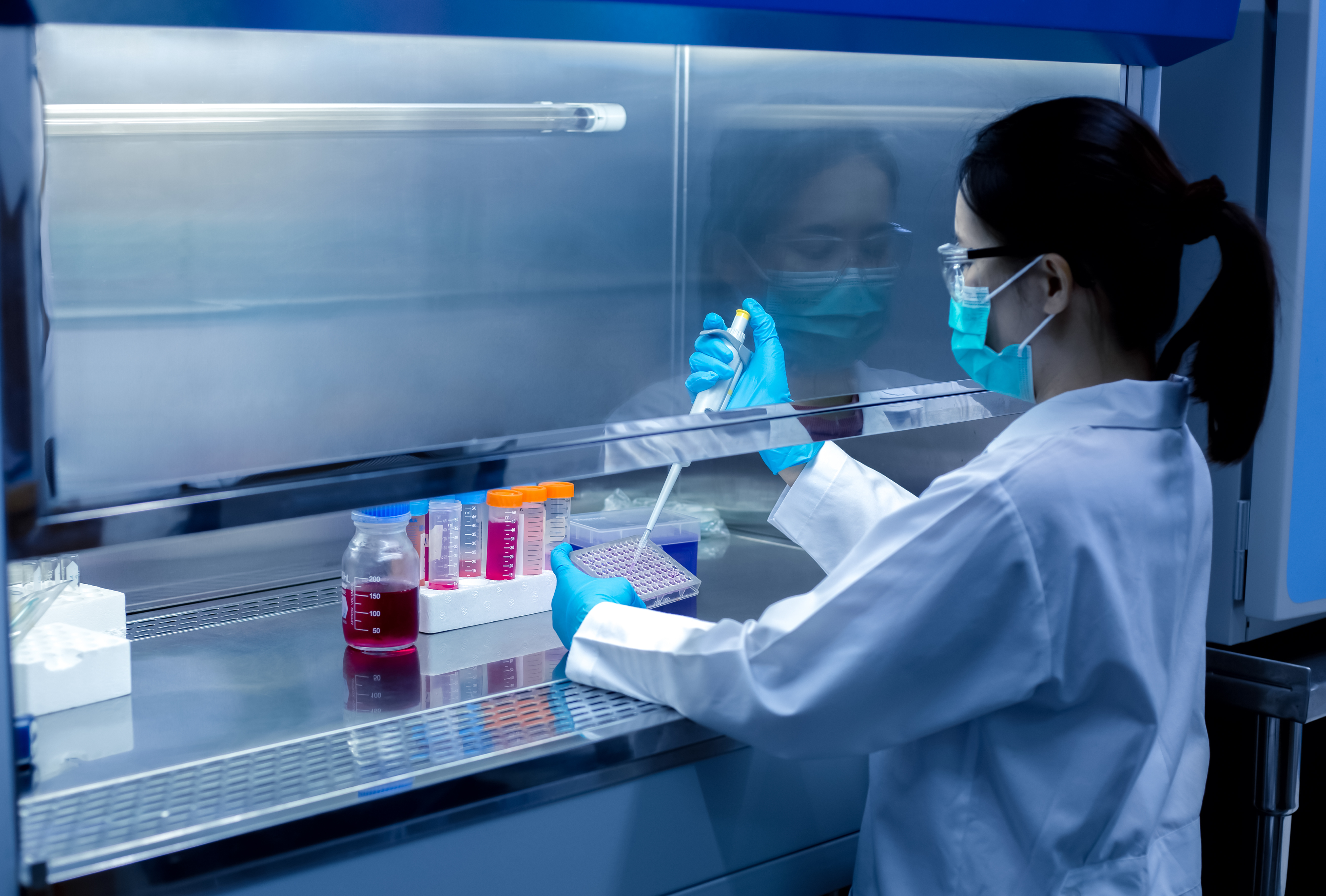
Every 16th June, International Biotechnology Day is a chance to recognise how far biotechnology has reshaped medicine, industry, and everyday life. Europe is often overshadowed by the United States in the headlines, but its biotech industry has quietly become one of its most valuable sectors. It is home to the company that co-developed the first mRNA COVID-19 vaccine, to some of the world's most important healthcare companies, and to research clusters that rival those in any other region. Yet behind every breakthrough are the people who make it happen. Biotechnology's impact is, ultimately, a story about talent, and Europe's ability to sustain it depends on the scientists, engineers, and specialists who turn discovery into real treatments.

Insights
International Biotechnology Day 2026: celebrating European biotech's growth and impact
International Biotechnology Day is a good moment to take note of where European biotech stands in 2026. It is a sector of real scale, anchored by globally significant companies, growing steadily, and delivering impact well beyond the laboratory. This piece looks at the industry today, the major and fastest-growing companies leading it, where growth is heading, and the difference biotechnology makes to patients, economies, and society.
A European industry that punches above its weight
Europe's biotechnology sector is large, advanced, and woven deep into the region's economy. By most estimates, it was worth between €360 billion and €410 billion in 2024. It is projected to grow from around USD 419 billion in 2024 to over USD 1.2 trillion by 2034, a compound annual growth rate of roughly 11%, with Germany leading the regional market. In recent years, Europe has accounted for close to a third of the global biotechnology market, with healthcare as its largest segment.
Its real strength lies in the ecosystem. European biotech is built on world-leading research institutions and a clear regulatory framework through the EMA and EFSA. It is also built on dense, collaborative clusters: Medicon Valley around Copenhagen and Malmö, the Cambridge and Oxford corridor, the Basel region, the mRNA hub around Mainz, the Belgian VIB ecosystem, and the advanced-therapy cluster around Leiden. These hubs bring talent, capital, and academic partnerships together in a way that compounds over time.
The result is not a handful of isolated success stories but a genuine, diversified industry. That breadth, across therapeutics, diagnostics, and industrial and agricultural biotech, is what makes the sector resilient and gives Europe a real claim to global significance.
The European companies leading the way
Europe is home to some of the most important biotech companies in the world, across several countries and modalities.
BioNTech, based in Mainz, became a household name as the company that, with Pfizer, brought the first mRNA COVID-19 vaccine to market. It is now using mRNA well beyond vaccines. Its work includes personalised cancer vaccines designed around a patient's own tumour, and a partnership with the Gates Foundation on diseases such as tuberculosis and HIV.
Denmark's Novo Nordisk shows both sides of the sector. Its GLP-1 obesity and diabetes drugs lifted it, for a time, to become Europe's most valuable listed company. It then fell sharply after a run of disappointing trial results. Close to $ 100 billion was wiped from its value by a single set of weight-loss trial results in late 2024, with further declines into 2026. The rise and fall together capture how much promise and volatility the sector holds.
The depth runs further still. Genmab, in Copenhagen, is known for antibody therapies such as Darzalex and its DuoBody bispecific platform, and generated around €2.5 billion in revenue. In 2025, it agreed to buy the Dutch oncology company Merus for roughly €6.8 billion. Argenx, the Dutch-Belgian autoimmune specialist, has built one of the sector's fastest-growing pipelines around its therapy Vyvgart. Medicon Valley, around Copenhagen and Malmö, is home to ten companies in the European biotech top thirty, including Novo Nordisk, allergy specialist ALK-Abelló, CNS-focused Lundbeck, peptide leader Zealand Pharma, vaccine developer Bavarian Nordic, and industrial-biotech firm Novonesis. Add Switzerland's Lonza, the Netherlands' gene-therapy pioneer uniQure, and the UK's Oxford Nanopore, and the picture is of a broad, modality-rich industry.
So Europe's biotech strength is not a one-company story. From mRNA and antibodies to gene therapy, peptides, and industrial biotech, the region leads across several frontiers at once. That is what makes its position durable.
Five rapidly growing European biotech companies
A handful of companies stand out for their growth momentum heading into 2026.
- Argenx (Belgium and the Netherlands) is the clearest growth story in European biotech. It is built around its autoimmune therapy Vyvgart, and is forecast to grow revenue by around 39% to roughly USD 5.7 billion in 2026, a sector-leading profile, equivalent to about €4.9 billion. It ended 2025 as one of Europe's most valuable biotechs.
- Zealand Pharma (Denmark) has risen fast on the strength of its obesity and metabolic pipeline. It is led by the amylin analogue petrelintide and backed by a major partnership with Roche, with a series of important pipeline readouts due through 2026.
- Genmab (Denmark) is accelerating its shift to a wholly owned commercial model. It is anchored by its antibody platforms and its roughly €6.8 billion purchase of Merus, which adds a late-stage head and neck cancer asset and should drive growth into the next decade.
- UCB (Belgium) has strong momentum from its immunology biologic Bimzelx, including a strong launch in hidradenitis suppurativa. Its full-year 2026 revenue is forecast at around €8.4 billion, with further upside in the pipeline expected.
- Lonza (Switzerland) is the fast-growing engine behind the sector. As one of the world's leading contract development and manufacturing organisations, it is expanding biologics and cell-and-gene-therapy capacity in one of the fastest-growing parts of European biotech.
The common thread is telling. Growth in European biotech is being driven by differentiated science in autoimmune disease, obesity, and oncology, by disciplined dealmaking, and by the capacity to manufacture at scale. Every one of those depends on specialist talent to deliver.
Conclusion
International Biotechnology Day is a good moment to recognise how much European biotech has achieved, and how much it still stands to contribute. The sector is large and growing. It is anchored by companies that lead the world in mRNA, antibodies, gene therapy, and metabolic medicine, and pushed forward by fast-growing names like Argenx, Zealand Pharma, and Genmab. Its impact runs from the patients whose lives its therapies change to the economies its clusters support. The challenges are real, especially the capital and talent gaps that limit how far European companies can scale at home. But the foundations are strong, the science is advancing, and the opportunity is significant. Above all, this is a day to recognise the people behind the breakthroughs. Biotechnology's future, in Europe and everywhere, will be built by the talent that turns discovery into impact.