Guides

Preparing Your Next Career Move

The life sciences market has tightened, and hiring companies have more leverage than they've had in a while. Layoffs across biotech, medtech and pharma, stalled hiring, an AI investment cycle that has shifted budgets, and a broadening talent pool mean more candidates are now competing for the same role. What hasn't changed is what actually wins: a strong CV gets you the interview, strong outreach gets you in front of the right hiring managers, and a strong interview lands the offer. This guide breaks down what's working right now across all three, drawn from the live processes we run and the hiring managers we talk to every day.

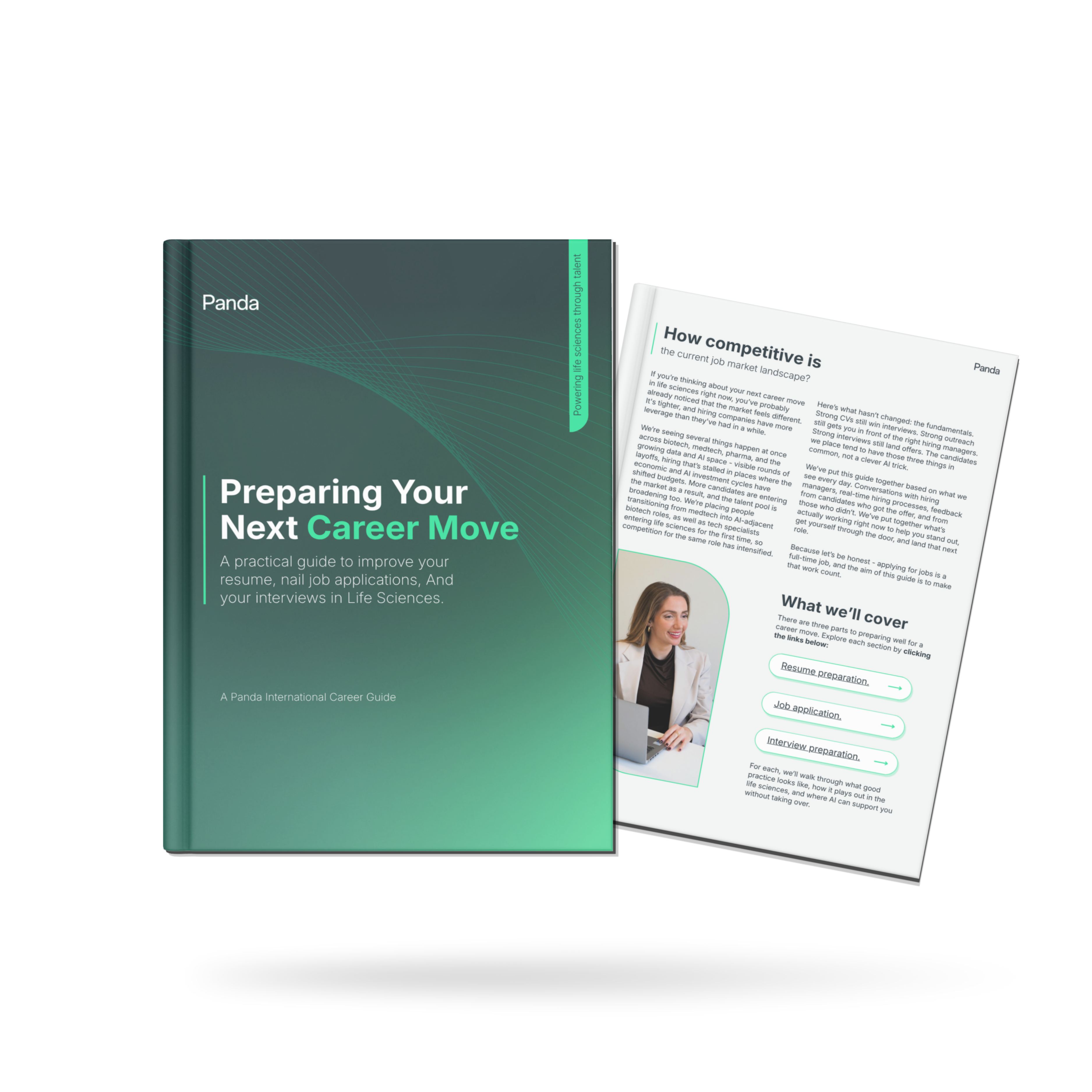
Preparing Your Next Career Move Background Image

Why the fundamentals matter more in a tighter market, not less

When the market loosens, a good CV and an online application are often enough, but that's not the market candidates are in right now. Hiring is more selective, competition is sharper, and the same role attracts professionals transitioning in from adjacent sectors, specialists moving into AI-adjacent biotech roles, and tech professionals entering life sciences for the first time. This means the bar for landing an interview has gone up.

We know that the candidates who get placed are the ones who have done three things well: built a CV that reads like evidence, reached out directly to hiring managers rather than relying on the form, and walked into each interview prepared to show how they think, not just what they know.

This guide is built on the part of the process most candidates can't see: conversations with hiring managers, real-time feedback from those who got the offer and those who didn't. Applying for jobs is a full-time job, so the point of this guide is to make that work count.

Preparing Your Next Career Move Image


What this guide will sharpen before you start applying


Get the two-page structure that consistently wins interviews, plus the longer detailed version that senior scientific and regulatory roles will ask for. Learn why achievement-led bullets beat responsibility lists, and which specifics (modalities, therapeutic areas, regulatory bodies, submission types) hiring managers genuinely scan for.

See what actually filters candidates out: location, right-to-work, industry fit, non-negotiable experience, versus the myth that AI screens reject people for word choice. Learn why most silence comes from sitting in the middle tier of applicants, and how a strong outreach message pulls you out of it.

In life sciences, cover letters are largely dead. Learn the short, specific outreach message that's replaced them, who to send it to, the three or four sentences that work, and why pairing your own outreach with a specialist recruiter moves fastest.

Understand why practical and case-study rounds have become much more common in the last two years, what hiring managers are testing (regulatory, scientific, or commercial judgement), and why the strongest candidates talk through their reasoning out loud, including the parts where they're genuinely uncertain.

Get the prompts that work at each stage, spotting where your CV describes duties instead of results, drafting outreach you'll actually want to send, and pressure-testing your interview answers before you're in the room. And understand the hard line: inflated CVs don't survive, and AI errors become your mistake, not the tool's.

Not every process ends in an offer. Learn what to expect from feedback (and why sparse feedback usually isn't about you), how to leave a process gracefully whatever the outcome, and what a short, specific message after a "no" does for the conversations that come next.

Download eBook

Fill in the form to get your free guide