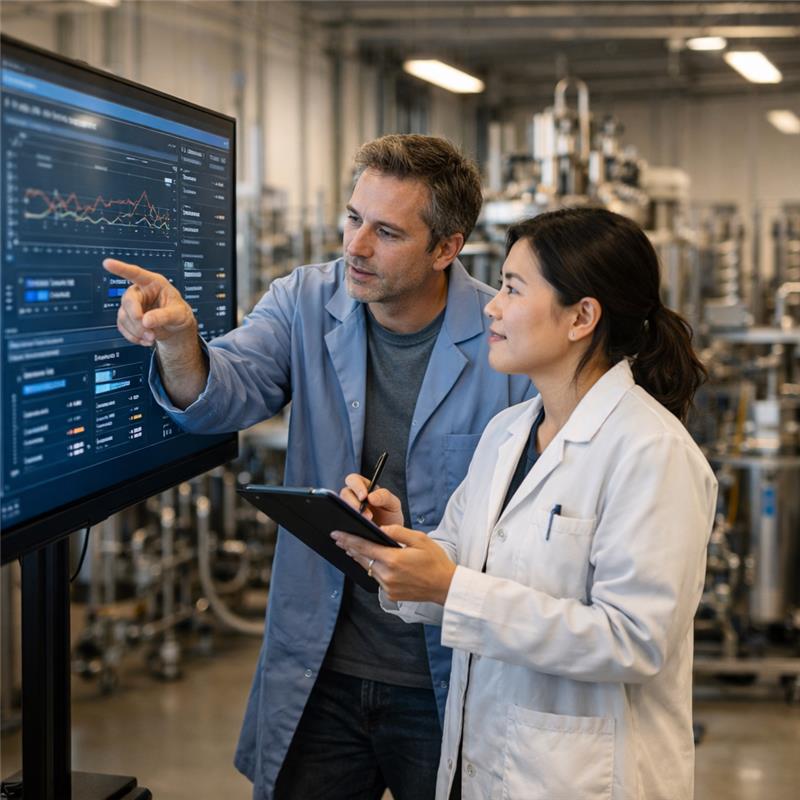
There is a significant shift happening inside biotech organisations. Alongside the extraordinary science of gene therapies, cell therapies, and radioligand treatments, a parallel transformation is underway in how these companies operate. Digital tools are moving from pilot programmes into the heart of manufacturing, quality, and supply chain functions. Most organisations are realising, often a little too late, that the technology is the easy part. The harder part is people.
Workforce planning for digital transformation in biotech is not a human resources conversation. It is a strategic one. It sits at the intersection of operational readiness, regulatory compliance, and the ability to move therapies from bench to patient. That intersection is currently underserved across the European advanced therapy ecosystem in Switzerland, Germany, the Netherlands, and Belgium.
WHY THE DIGITAL LAYER LANDS ON AN ALREADY STRAINED SYSTEM
Advanced therapy companies are already operating at full stretch. Many are building GMP manufacturing capability for the first time, navigating EU regulatory frameworks that have grown more demanding since Annex 1 became fully applicable in August 2024, and running QC operations under time constraints that leave very little margin for error. Into this environment, digital tools add genuine power but also genuine complexity.
The people required to use these tools are the same people managing comparability packages, batch release timelines, and tech transfer risk. They were not hired for digital fluency. They were hired for scientific and regulatory expertise. That is not a criticism it is the nature of the field. But it does mean organisations cannot simply deploy new technology and assume adoption will follow.
What we hear consistently across conversations with heads of quality and manufacturing directors in Basel, Munich, and Leiden is a version of the same problem: the digital tools are there, the data is there, but the people who can bridge scientific rigour with digital fluency are genuinely hard to find.
WHY THIS IS NOT SIMPLY A TRAINING PROBLEM
It would be tempting to frame this as a gap that training programmes can close. Training matters it is part of the answer. But treating this as purely a training challenge misunderstands what digital transformation in biotech actually demands.
Consider what a QA Specialist needs in a digitally transformed GMP environment. They need to understand the scientific and regulatory basis of every system they oversee. They need to interrogate outputs from automated monitoring tools with the same rigour they would apply to a handwritten deviation report. They need to recognise when a digital system is surfacing a real signal versus an artefact of how data was captured. That judgment the intersection of regulatory expertise, manufacturing knowledge, and data literacy is not something a two-day module creates.
A BioProcess International survey found that 90% of respondents perceive a shortage of personnel with the skills needed for ATMP manufacturing. Adding digital complexity on top of an already strained talent pool does not make that problem smaller.
THE ROLES WHERE THE GAP IS MOST VISIBLE
These are the areas where the combination of operational pressure and digital change is creating the most acute hiring challenges right now:
-
Process Development Scientists expected to work within digital process modelling environments alongside deep GMP and scale-up expertise.
-
Analytical Development Scientists designing and defending assays in digital documentation ecosystems is now a baseline expectation.
-
QA Specialists and Managers electronic QMS and automated deviation detection require professionals who are compliance-fluent and comfortable with data environments under Annex 1.
-
Qualified Persons batch certification in digitally transformed facilities requires navigating complex audit trails across integrated systems. Legal responsibility is unchanged. The evidence landscape is not.
-
MSAT and Tech Transfer Specialists digital process comparability requires MSAT leaders who operate across both the scientific and data dimensions of a transfer simultaneously.
-
QC Scientists real-time release testing requires professionals who manage both the method science and the data infrastructure supporting compliant release decisions.
These roles share a common characteristic: they cannot be filled by strong scientific candidates alone, nor by digitally fluent generalists alone. The intersection is what is scarce, and the intersection is what operational teams need.
WHY WORKFORCE PLANNING MUST RUN AHEAD OF THE TECHNOLOGY ROADMAP
One of the most consistent mistakes we observe is organisations building their technology roadmap first and their workforce plan second, or not at all. A new MES platform is selected, the go-live date is set, and then, eight months before implementation, someone asks: Who will actually run this?
By that point, the talent market no longer cares about internal timelines. The pool of QA professionals with both advanced modality expertise and experience with digital GMP systems is small and highly competitive. Effective workforce planning for digital transformation means treating talent acquisition as a parallel workstream to technology implementation, not a downstream dependency of it.
For organisations in Basel, Munich, Leiden, and the broader German manufacturing corridor, the challenge is compounded by cluster competition. Every organisation in these ecosystems pursuing digital transformation is drawing from the same restricted talent pool. Companies that move early, with genuine clarity about what they are hiring for, consistently outperform those that wait until a vacancy becomes urgent.
THE DELIBERATE PLANNING PLAYBOOK
Biotech organisations that navigate this well in 2026 will not be those that hire fastest. They will be those who plan with the most intent.
1. Start with delivery risk, not headcount. Identify where manufacturing, compliance, or release would break if a specific capability became constrained. Validation, QP capacity, MSAT, and digital QA ownership carry disproportionate risk during transformation phases.
2. Map capability gaps before go-live, not after. Twelve to eighteen months before technology implementation, assess which existing roles are fundamentally changed and which new profiles do not yet exist within the organisation.
3. Separate build, buy, and develop decisions. Not every digital capability gap requires an external hire. But some do particularly where the combination of modality expertise and digital fluency is needed from day one. Being honest about which is which prevents costly delays.
4. Look adjacent, not just within the sector. Biologics manufacturing, large-molecule pharma, and food science GMP environments have produced professionals with strong fluency in digital systems. With the right modality onboarding, these candidates are often accessible before they appear on the open market.
5. Map the passive talent market before the vacancy opens. The professionals who fit these hybrid profiles are rarely actively searching. Understanding who exists in the market before a need is urgent separates organisations with options from those forced into compromise.
Digital transformation in biotech is not a technology story. It is an operational capability story, and at its core, it is a people story. The organisations that scale reliably that keep pace with their own pipelines, satisfy regulators, and get therapies to patients without unnecessary delay are the ones building workforce strategy with the same rigour they apply to manufacturing processes.
The science is ready. The technology is arriving. The question is whether the teams are being built to meet both.
If your workforce planning for digital transformation is already taking shape, now is the time to assess where delivery and compliance pressure will concentrate not just where roles may open.